ServicesWhole-Home Rewiring
Whole-Home Rewiring in White Settlement
Old wiring rarely fails all at once. It warms connections, trips breakers and leaves outlets without a ground. We look at what's in your walls, explain in plain English what each type of wire means for your home, and lay out whether a full rewire or a partial one makes sense.
What Rewiring Means for Your Home
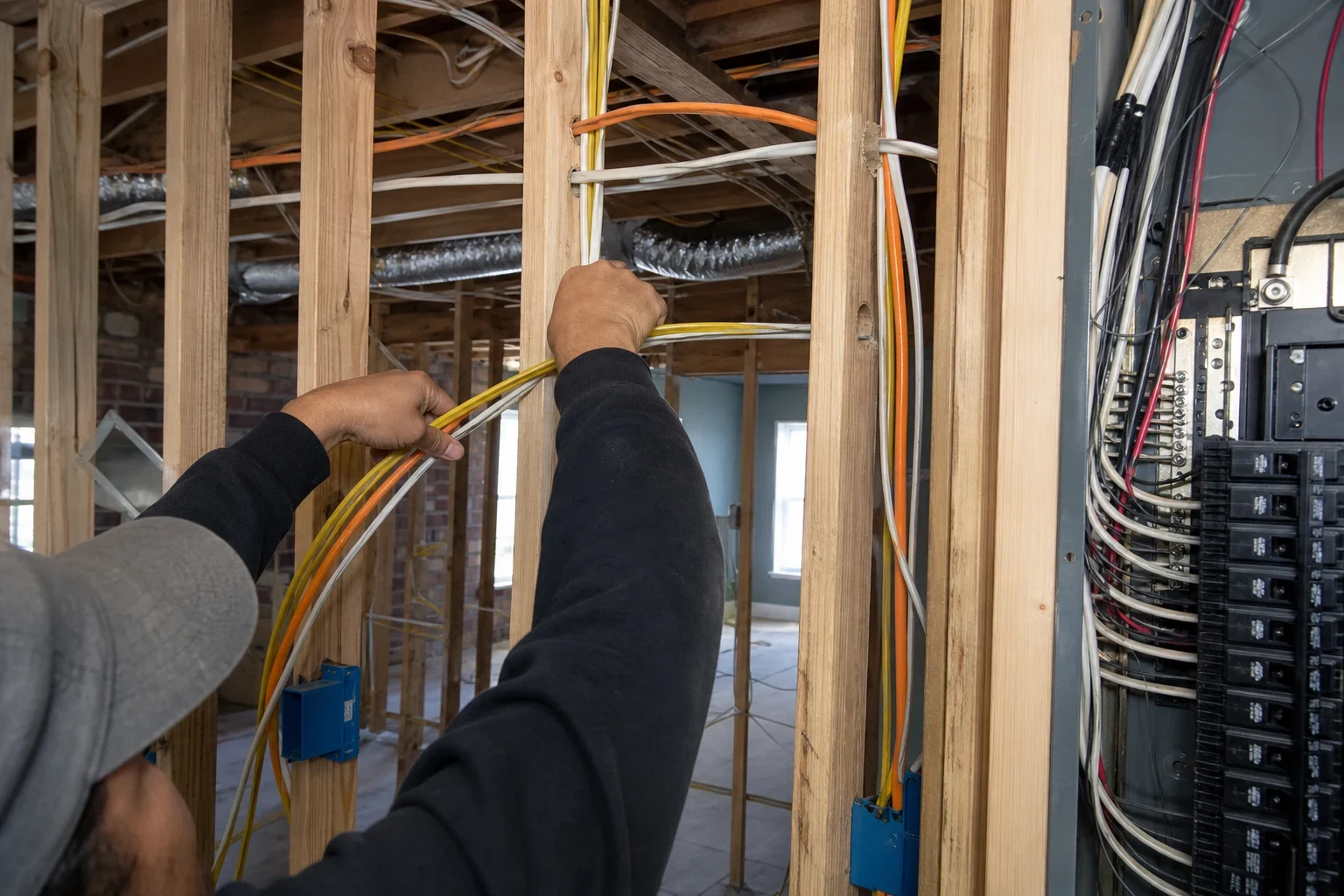
Rewiring replaces the branch circuits that run from your panel to the outlets, switches and lights in each room. The old wire comes out of service, and new copper cable with a proper ground goes in its place. When we finish, every circuit is labeled at the panel and protected the way current code expects.
Not every older house needs the whole job. Sometimes one wing or a handful of circuits carry the problem, and the rest of the wiring tests fine. We hold a Master Electrical License and have spent 5 years in business working in homes around White Settlement and Fort Worth, and we would rather tell you a partial rewire will do than sell you more than your home needs.
If you are unsure what you have, that is the normal starting point. We open a few boxes, test the circuits and show you what we found before anyone talks about scope.
What the Work Includes
- 01
Testing and a circuit map
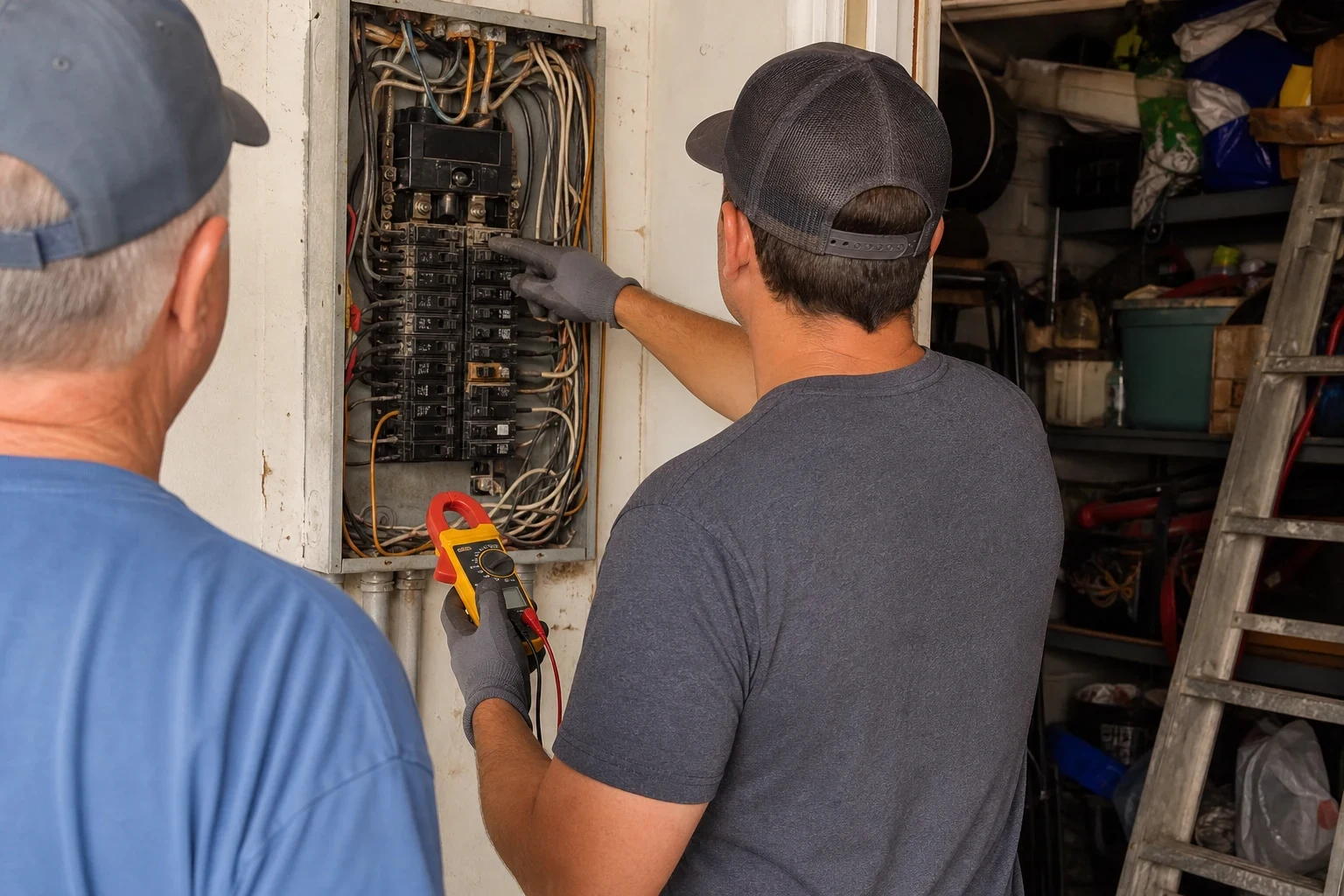
We test each circuit, check for ground and note the wire type in several locations. You get a simple map of which rooms share which breakers, so the plan makes sense to you.
- 02
New copper branch circuits
Worn cloth-insulated, knob-and-tube or problem aluminum wiring is replaced with new grounded copper cable. Kitchens, baths and laundry get their own circuits where code calls for them.
- 03
Modern protection at the panel
New circuits get AFCI and GFCI protection where required. That is the protection that shuts power off when it senses arcing or a ground fault, before it becomes heat in a wall.
- 04
Outlets, switches and boxes
Two-prong outlets become grounded three-prong outlets, and loose or undersized boxes are replaced. Smoke alarm wiring is brought up to what the inspection requires.
- 05
Small openings, closed up
We fish wire through attics and walls to keep openings small, then close them. We will tell you up front how much patching to expect and whether finish paint is part of our scope.
- 06
Permit and inspection
We pull the permit and schedule inspections as required by your local jurisdiction. If your panel can't carry the new circuits, we explain that and our Panel Upgrades work as a separate option.
Questions about Whole-Home Rewiring?
Call(682) 474-0799Signs Your Wiring Is Due for Replacement
Two-prong outlets throughout
Ungrounded outlets usually mean ungrounded circuits. Adapters hide the problem but don't fix it, and sensitive electronics lose their safe path for a fault.
Cloth or rubber insulation
Older insulation turns brittle with age and heat, and it can crack when touched. If you see fabric-wrapped wire in the attic or at a box, it is worth a closer look.
Aluminum branch wiring
Some homes built in the 1960s and 70s used aluminum for outlet circuits. Its connections loosen and run warm over time. There are repair methods as well as replacement, and we explain both.
Warm plates or a burning smell
A switch plate that feels warm, outlets that discolor or a faint hot plastic smell point to failing connections. Shut that circuit off and have it checked.
Lights that dim and breakers that trip
Flickering when the AC kicks on or repeated trips can come from overloaded old circuits. Sometimes it is a single repair, which our Electrical Repair visit covers.
An inspector or insurer flagged it
Home inspections often call out old wiring during a sale or a policy review. We can look at the report with you and sort out which items need action.
How a Rewire Goes, Step by Step
- 1
Walkthrough and testing
We walk the house with you, test circuits and open a sample of boxes. You see the wire we find, not just hear about it.
- 2
Options in plain English
We explain full versus partial rewiring, what each one fixes and what it leaves alone. You get a written scope so you can decide without pressure.
- 3
Permit and a room-by-room plan
Once you approve, we pull the permit and set an order of rooms. Most families stay home during the work, and we plan to restore power to lived-in areas at the end of each day.
- 4
Wiring, protection and cleanup
Old circuits are taken out of service, new ones are run and connected, and work areas are covered and swept daily. Furniture is moved only as far as needed.
- 5
Inspection and walkthrough
After the inspection passes, we walk you through the labeled panel and test outlets with you. You know which breaker runs what before we leave.
What Moves the Cost of a Rewire
Every house wires differently, so we price from what we find on the walkthrough rather than a flat number. Your written scope lists each part of the job so nothing shows up later as a surprise. These are the things that change the total most.
- Size and number of circuits
- More rooms and more circuits mean more cable and more labor. A partial rewire of one area costs less than the whole house.
- Attic and wall access
- Most slab homes here are wired through the attic, and summer attic heat can shape scheduling. Low clearance, insulation depth and finished ceilings all affect how long runs take.
- Wall finishes
- Drywall is easier to fish through and patch than plaster or paneling. Built-ins and tile backsplashes can also add time.
- Panel capacity
- If your existing panel can't take the new protected circuits, a panel upgrade may be needed alongside the rewire. We price it separately so you can see each piece.
- Permit and inspection fees
- Fees are set by your local jurisdiction and are listed on your scope, not folded into a vague total.
Whole-Home Rewiring Questions
Do we have to move out while you rewire?
Usually no. We work room by room and plan to have power back to the rooms you use each evening. Expect some noise and furniture shifting, and we cover floors and clean up daily.
How long does a full rewire take?
It depends on the size of the house, attic access and the wall finishes. A partial rewire may take a day or two, while a whole house takes longer. We give you a working schedule with your written scope.
Will my walls be torn up?
We fish cable through the attic and existing cavities to keep openings small. Some holes are unavoidable at boxes and corners. We close them and tell you beforehand how much finish work, like paint, to plan for.
Do I really need to replace aluminum wiring?
Not always. Aluminum circuits can sometimes be made safer by repairing the connections with approved methods. We explain that option and full replacement, along with what each costs and what it leaves in place.
Do you pull the permit for rewiring?
Yes. We pull the permit and schedule inspections as required by your local jurisdiction, and the work is not finished until it passes.
Who will be doing the electrical work?
The work is done under our Master Electrical License, and we have been in business for 5 years. You can ask any question on the walkthrough, and we answer it before work starts.
See What Your Walls Are Hiding
One service visit gives you tested results and a clear, plain-English view of your wiring, along with the options that suit your home. We work in White Settlement and nearby towns such as Benbrook, River Oaks and Lake Worth.