ServicesGenerator Installation
Generator Installation in White Settlement
We install standby generators and safe hookups for portable units, sized to the circuits you actually want running when the power drops. Before anything is ordered, we walk you through each option in plain terms so you know what you're buying and why.
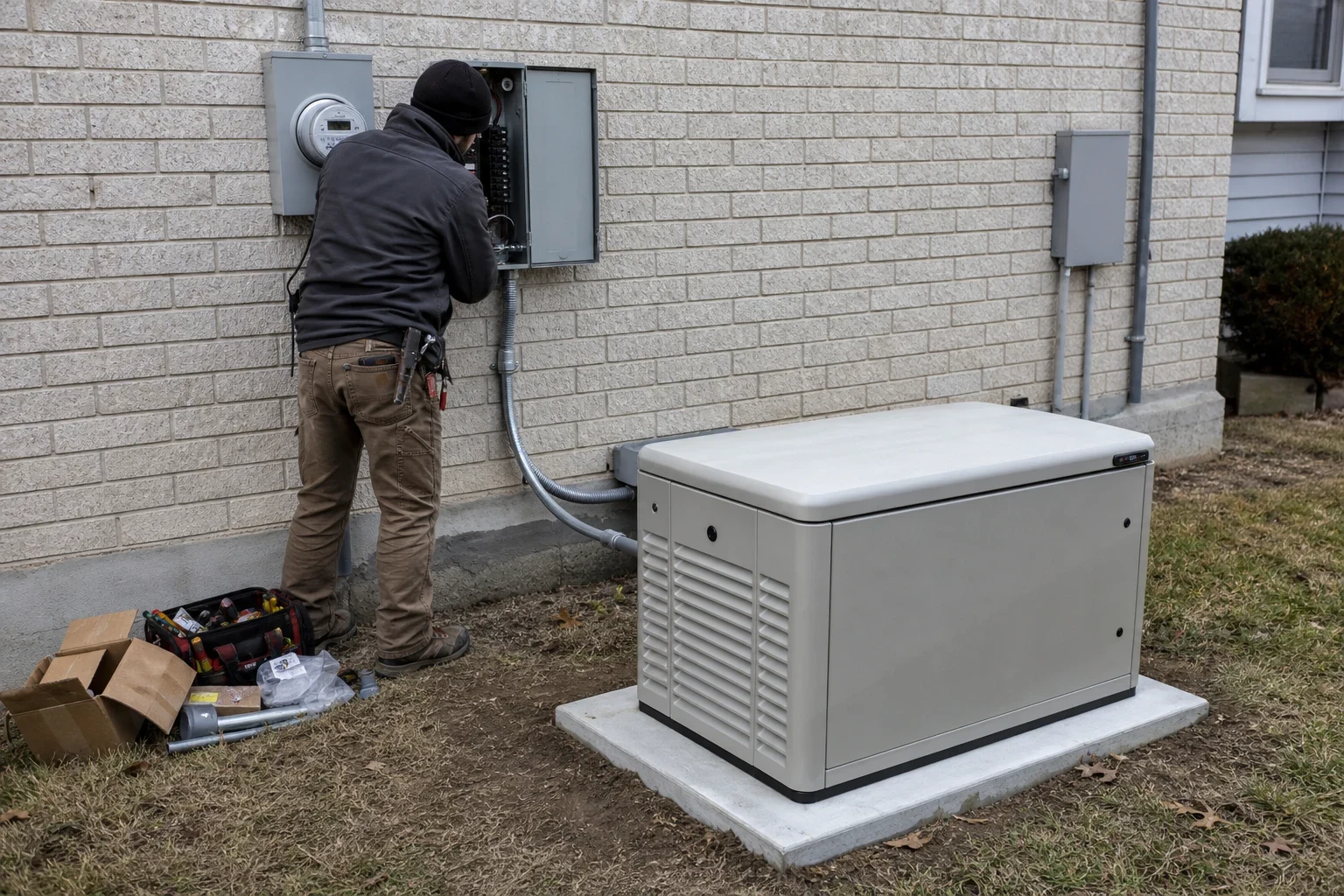
What a Generator Setup Really Involves
A generator is only half the job. The other half is how it connects to your home. Every safe setup uses a transfer switch or a listed interlock, which keeps generator power from flowing back onto the utility lines and keeps utility power from hitting the generator when service returns.
Most people choose one of two paths. A standby generator sits outside on a pad, runs on natural gas or propane, and starts on its own within seconds of an outage. A portable generator plugs into an inlet box on the outside wall, and you flip an interlock at the panel to run the circuits you pick.
Neither is the right answer for everyone. Summer storms and the occasional winter ice event can knock power out here, and what you need running through one, whether that's the air conditioning, the fridge or a medical device, decides which setup makes sense. We hold a Master Electrical License and have spent 5 years in business helping homeowners make that call.
What's Included in the Install
Load calculation and sizing
We list what you want powered and add up the starting and running loads. An air conditioner compressor pulls far more at startup than while running, so it often drives the size. Getting this right keeps you from paying for a unit that is too big or living with one that is too small.
Transfer switch or interlock
For standby units we install an automatic transfer switch. For portables we install a listed interlock kit and an outdoor inlet. Either way, backfeeding the utility lines becomes impossible.
Pad placement and clearances
We set the unit where the manufacturer's clearances from windows, doors and vents are met, and where exhaust won't drift into your home.
Load management where it helps
Load management modules let a smaller generator handle big appliances by shedding one load while another starts. It can mean a whole-home feel without a whole-home price tag.
Permit, inspection and startup
We pull the electrical permit as required by the local jurisdiction, schedule the inspection, then start the unit, test a transfer and show you how it works.
Signs a Generator Is Worth Considering
You've lost food or sleep to outages
If a few outages a year leave you emptying the fridge or sweating through the night, a generator pays you back in comfort.
Someone relies on powered equipment
Oxygen concentrators, sump pumps and refrigerated medicine can't wait for the utility. A standby unit covers them without anyone needing to be home.
You run a portable on extension cords
Cords through a cracked door work, but they limit what you can power and invite carbon monoxide inside. An inlet and interlock is the safer version of the same idea.
You work from home
An outage that kills the internet and computer costs a workday. Even a modest setup can keep an office circuit and the router running.
How the Job Goes, Step by Step
- 1
Service visit and walkthrough
We look at your panel, the spot outside where a unit could sit and your gas or propane situation. Then we explain standby versus portable, whole-home versus essential circuits, and what each means for cost.
- 2
Written plan and permit
You get a written scope that lists the generator size, switch type and circuits covered. Once you approve it, we file the permit. Gas piping is plumbing work, so we tell you exactly what fuel supply the unit needs so your plumber or gas provider can confirm the meter and line.
- 3
Install day
The pad goes down, the unit is set, and we wire the transfer switch at your panel. Power to your home is off for part of the day while we work at the panel, and we tell you ahead of time when.
- 4
Inspection and handoff
After the inspector signs off, we run the generator, simulate an outage and show you the controls and weekly exercise cycle. Ongoing care is covered by our generator service and repair work.
What Drives the Cost
Generator jobs vary in price more than most electrical work, since the equipment makes up much of the total. After the visit we give you a written estimate that separates the unit, the switch and the labor, so you can see what each part costs.
- Type and size of unit
- Hooking up a portable is much cheaper than a standby unit, and a standby sized for the whole home costs more than one sized for essentials.
- Kind of transfer switch
- An interlock is the most basic option. An automatic transfer switch adds parts and labor, more so when it includes load management.
- Wire run and panel shape
- The farther the unit sits from the panel, the more wire it takes. An older or full panel might need work first, as our panel upgrades page describes.
- Site work and permits
- Preparing the pad, any trenching and local permit fees all affect the total, and we list each one before you approve the job.
Generator Installation Questions
Something not covered here? (682) 474-0799
Do I need a whole-home generator, or will a smaller one do?
Many homes do fine with a unit sized for essentials: the fridge, some lights, outlets, the furnace fan and maybe one AC system. Whole-home makes sense if you want no changes in daily life during an outage. Load management can land you in between. We show you the tradeoff on the visit.
Can I just plug my portable generator into a wall outlet?
Please don't. A male-to-male cord can send power back onto the utility lines and injure line workers, and it can damage your generator when power returns. An inlet with an interlock does the same job safely.
Should I get a generator or a battery?
A generator runs as long as it has fuel, which suits long outages and heavy loads like air conditioning. Batteries are quiet and need no fuel but have limited stored energy. Our home battery backup systems page covers that option, and we're happy to compare both on one visit.
Are you licensed for this work?
Yes. We hold a Master Electrical License, and every generator job includes the permit and inspection required where you live.
Will you handle the gas line?
Gas piping is plumbing work, so we don't run it. We give you the fuel requirements in writing so your plumber or gas provider can confirm the meter and line size before install day.
Ready to Talk Through Your Options?
Book a service visit and we'll look at your panel and your yard, then explain which setup fits how you live. You'll have a written plan before any equipment is ordered.