ServicesSurge Protection
Surge Protection in White Settlement
We install whole-home surge protection at your electrical panel and explain, in plain terms, what it stops, what it can't, and where plug-in protectors still help. You get a clear picture of your options before anything goes in.
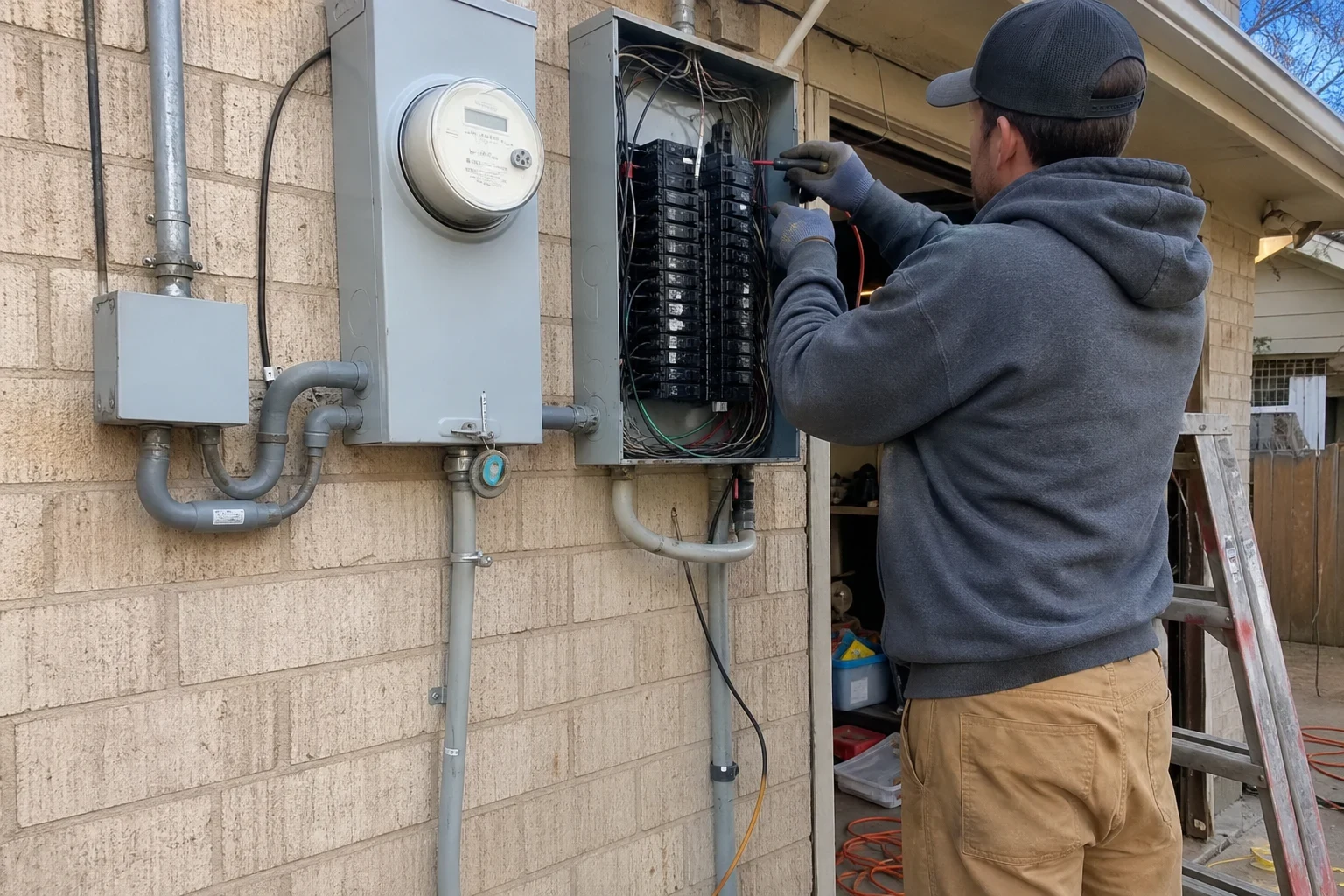
How Whole-Home Surge Protection Works
A surge is a brief jump in voltage that usually passes in a sliver of a second. The largest ones come from lightning and utility switching. Most, however, begin inside the house each time an AC compressor, refrigerator or well pump cycles. Every small spike adds wear to the circuit boards in your TV, furnace, washer and smart thermostat.
A whole-home surge protective device, called an SPD, is mounted at your main panel. When voltage spikes, it diverts the excess energy to ground before it can travel through your circuits. That makes it the first layer of defense. Plug-in protectors at a computer or entertainment center form the second layer, and the pair works best as a team.
Our work is done under a Master Electrical License, and for 5 years in business we've helped neighbors figure out which layers of protection fit their homes.
What's Included in the Work
- A look at your panel first
- We check the panel brand, open breaker spaces and overall condition. That tells us which surge device fits and whether anything needs attention before we add it.
- Grounding and bonding check
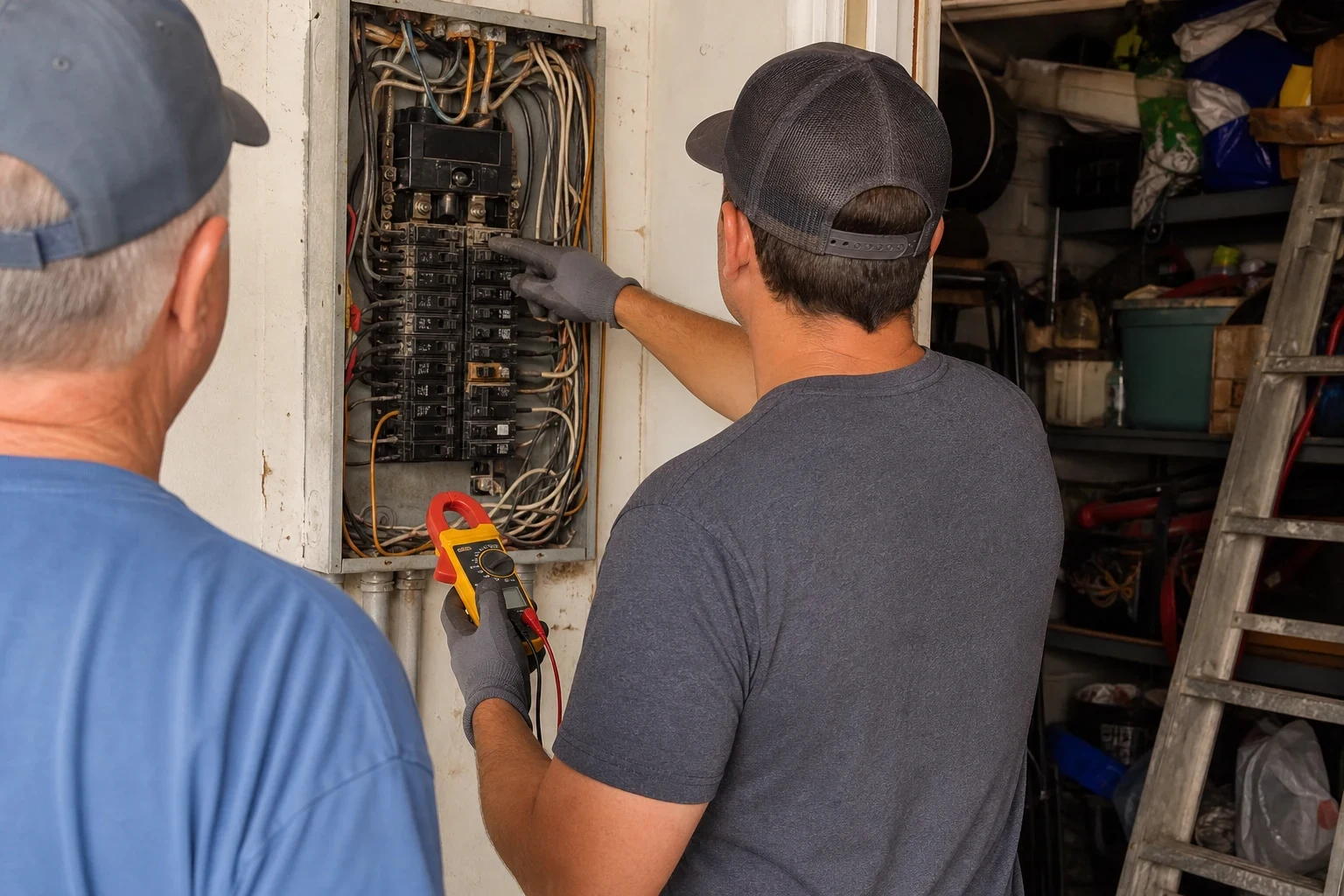
- A surge protector can only dump energy into a good ground. We test your grounding electrode connection and bonding, because a loose or corroded ground leaves the device with nowhere to send the surge.
- Type 2 SPD installed at the panel
- We mount the device, land it on a dedicated breaker with short, direct leads, and confirm the status lights show it's protecting. Shorter wire runs mean faster response, so placement matters.
- Point-of-use advice
- We'll tell you where plug-in protectors are worth buying, such as at a home office or media wall, and what ratings to look for on the box. No upsell, just a straight answer.
- Phone, cable and coax lines
- Surges can sneak in on cable and internet lines too. We'll point out unprotected entry points so you can decide whether to cover them.
Signs Your Home Could Use Surge Protection
Electronics dying early
If garage door openers, TVs or chargers keep failing before their time, repeated small surges are a common culprit.
Lights dim when the AC starts
A brief flicker when big motors cycle is a sign voltage is swinging on your circuits. It's worth a look, both for surge protection and for the wiring itself.
Losses after a thunderstorm
North Texas spring storms can knock out a modem, a furnace board and an appliance in one night. A panel-mounted SPD reduces the odds of a repeat.
New expensive equipment
A new HVAC system, appliance package, EV charger or generator all carry sensitive electronics. Protecting them at the panel is inexpensive next to replacing a control board.
An old protector with no lights
Surge devices wear out as they absorb hits. If the indicator light on your existing unit is dark or red, it may no longer be doing its job.
What Moves the Cost
Most surge protection jobs are small, but a few things change the scope. We explain each one during the visit so you know exactly what you're paying for before work begins. Your quote comes by phone or in person, never as a surprise on the invoice.
Open space in the panel
A panel with free breaker slots is straightforward. A full panel may need tandem breakers or a small rearrangement first.
Panel brand and age
Some older panels have limited compatible parts. If the panel itself is worn out, we'll tell you honestly and explain how panel upgrades compare.
Grounding repairs
If the ground rod connection or bonding is missing or corroded, fixing it is part of doing the job right.
Permits and inspection
Some jurisdictions require a permit for panel work. We handle permits and inspections as your local jurisdiction requires.
What Happens During Your Visit
- 1
A phone conversation first
Let us know what you've noticed and which equipment you'd like protected. We'll schedule a service visit for a time that suits you.
- 2
We check, then explain
At your home we examine the panel and grounding and go over your choices in plain language. You'll hear our recommendation and the reason for it before any work begins.
- 3
Putting the device in
Power goes off at the main for a short time, typically well under an hour, while we install the device, then it comes back on. Tell us in advance if anyone in the home depends on powered medical equipment.
- 4
Final check and walkthrough
We make sure the indicator shows the device is working and show you where to look for it later. Then we tidy up and fasten the panel cover back in place.
Surge Protection Questions
Can a surge protector handle lightning hitting my house?
Not reliably, and we won't tell you otherwise. A bolt that lands on your roof or service line carries far more energy than any residential device is built to absorb. Where a panel SPD earns its keep is the much more frequent stuff: lightning that hits nearby, spikes from utility switching, and the daily surges your own motors create.
Do I still need plug-in surge strips?
For sensitive gear, yes. The panel device knocks down the big spike, and a good plug-in protector catches what's left close to the equipment. Look for one with a listed safety rating and a working indicator light, not a basic power strip.
How long does installation take?
Most installs take an hour or two, including testing. Power is off for only part of that time. Grounding repairs or a crowded panel can add time, and we'll tell you up front if that's the case.
How do I know my surge protector is still working?
Most units have indicator lights on the front. Green usually means protected, while a dark or red light means it has done its work and should be replaced. We'll show you what yours looks like before we leave.
Should I add surge protection with a generator or battery backup?
It's a smart pairing. Inverters and transfer equipment have electronics worth protecting, so we often recommend it alongside generator installation or home battery backup systems.
Protect the Equipment You Count On
Tell us what you'd like protected and we'll set up a time to look at your panel and grounding. You'll get a plain answer about what fits your home before we start.