ServicesLighting Installation
Lighting Installation in White Settlement
We install recessed lights, ceiling fixtures, fans, under-cabinet lighting and outdoor lights in your home. Before any ceiling gets cut, we walk you through the choices in plain terms: brightness, color warmth, dimmer types and what each one means for how the room looks at night.
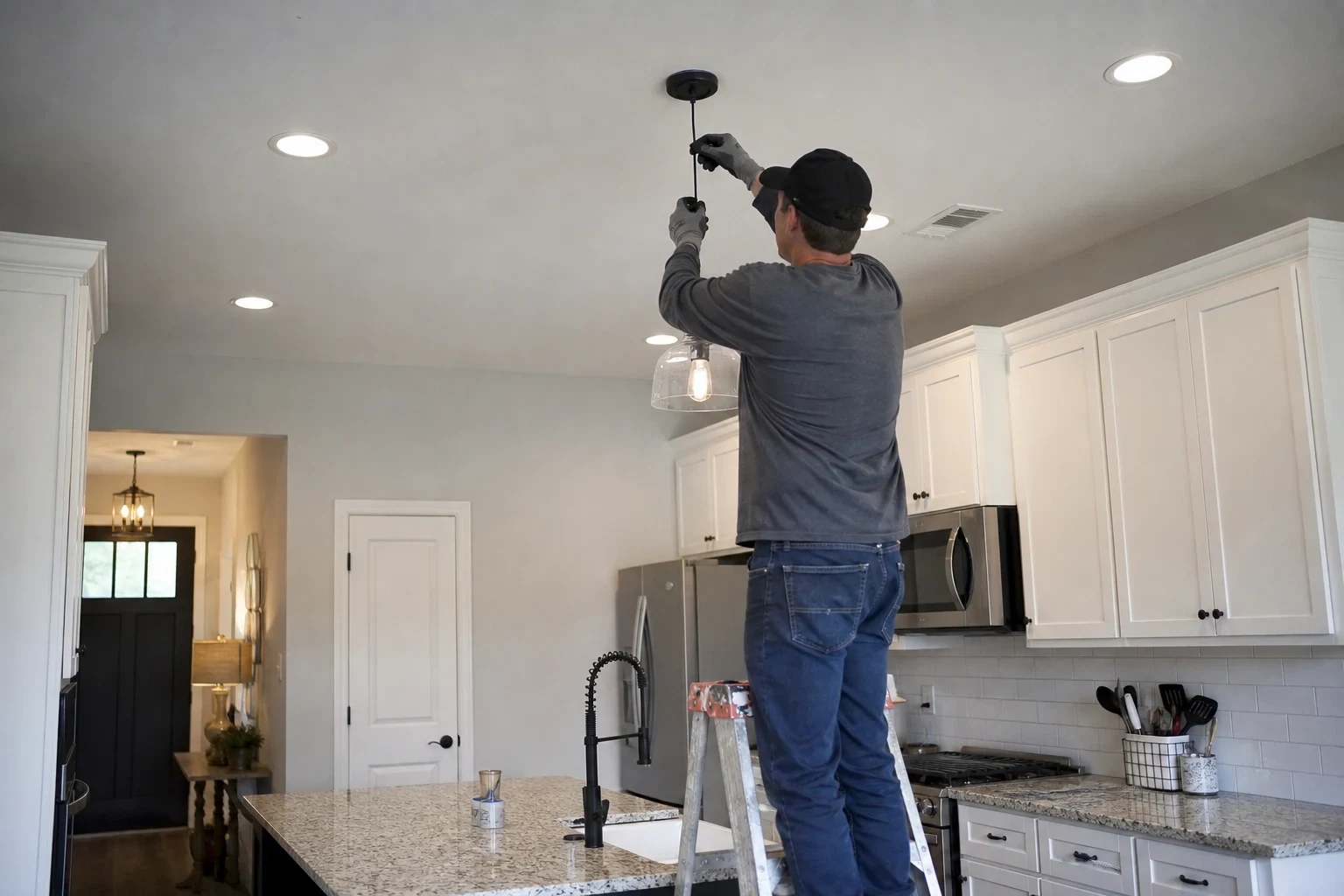
What lighting installation covers, and when it makes sense
Lighting installation means adding light where there wasn't any, or replacing what's there with something better suited to the room. It can be as small as swapping a dated dome fixture for a ceiling fan, or as involved as a kitchen full of recessed lights with a dimmer at each doorway.
Most people reach out because a room feels dim, a fixture flickers, or they're tired of one light in the middle of the ceiling. Our part is to show you the options, explain the tradeoffs and install what you pick so it's safe and up to code. Every job is done under our Master Electrical License, and in our 5 years in business we've helped neighbors in White Settlement, Benbrook and Lake Worth get the light they actually pictured.
If a fixture is acting up because of a loose connection behind it rather than the fixture itself, that's a job for our electrical repair service. We'll tell you which one you're dealing with.
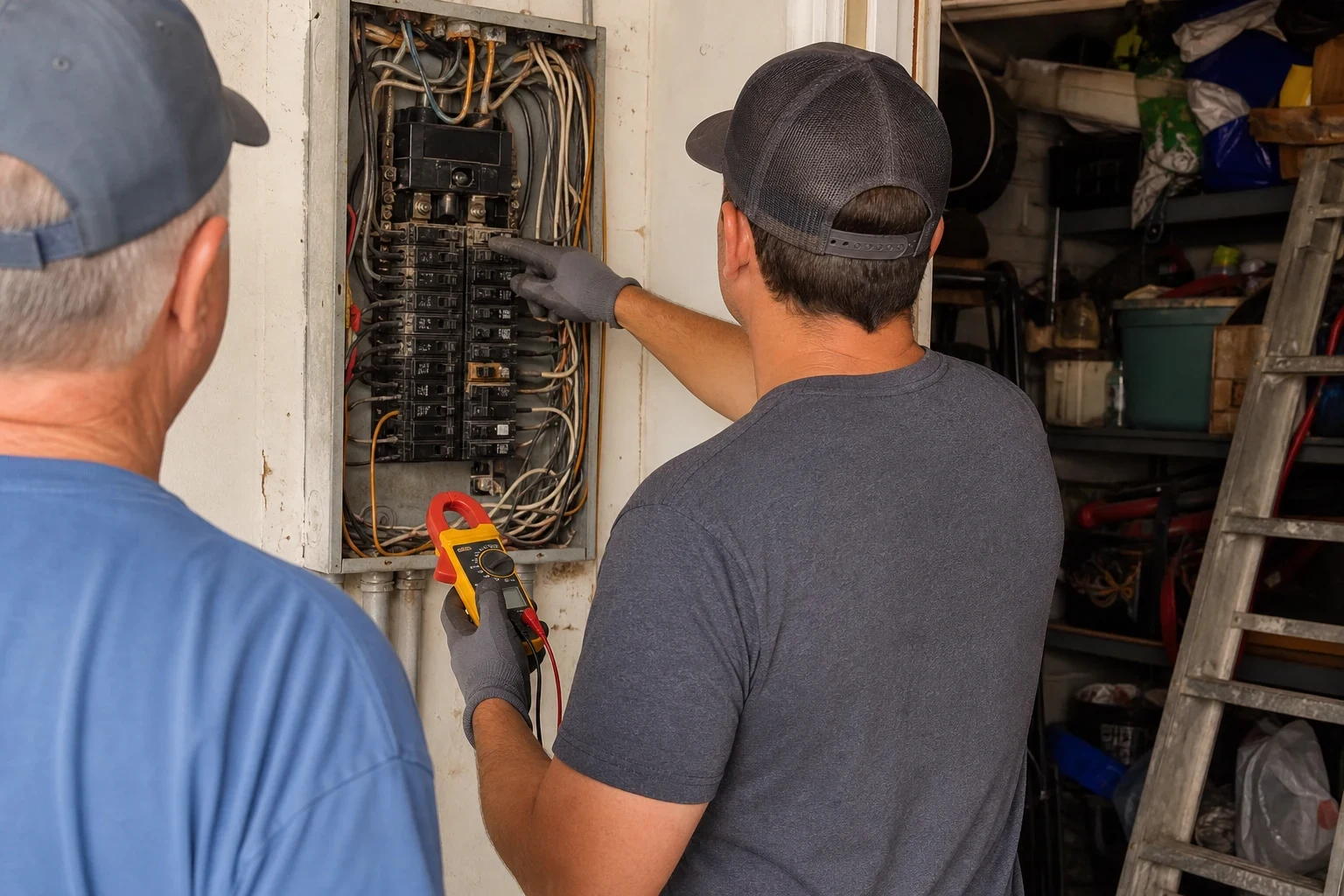
What we install
- 01
Recessed lighting
We install both traditional can lights and slim canless LED wafers. Wafers need only a small hole and very little space above the ceiling, so they fit under joists and ductwork where cans won't. Any light that touches attic insulation has to be IC-rated, and we confirm that before we cut.
- 02
Ceiling fans and heavy fixtures
A fan needs a fan-rated box fastened to the framing, not the light-duty box left from an old fixture. We replace the box when it's needed so the fan doesn't wobble or work loose over time.
- 03
Dimmers and switches
Many older dimmers were built for incandescent bulbs and cause buzzing or flicker with LEDs. We match the dimmer to the fixtures you choose, and we can add three-way switches so a hallway or stairway light works from both ends.
- 04
Under-cabinet and accent lighting
Low-profile LED strips or puck lights for counters, shelves and built-ins. Where we can, we wire them to a wall switch instead of leaving a plug hanging under the cabinet.
- 05
Outdoor and security lighting
Porch lights, floodlights and driveway fixtures rated for wet locations, with motion sensors or dusk-to-dawn photocells if you want them. Outdoor circuits get GFCI protection where code calls for it.
Questions about Lighting Installation?
Call(682) 474-0799Signs your home could use new lighting
Rooms that feel dim after dark
One center fixture leaves corners, counters and reading spots in shadow. Adding a few well-placed lights usually fixes that without making the room harsh.
LED bulbs that flicker or buzz
This is almost always a dimmer that doesn't suit LED loads. A compatible dimmer typically solves it.
Fixtures that run hot or show discoloring
A yellowed globe, browned paint around the base or brittle wires usually mean a bulb was too strong for the fixture for years. Have it looked at and replaced instead of just changing the bulb again.
A fan that wobbles or a fixture that sags
That often points to a box that was never meant to hold the weight. It's worth fixing before it gets worse.
Dark entries, steps and driveways
If you're fumbling for keys or guessing where the porch step is, outdoor lighting on a sensor makes coming home easier and safer.
Lamps and cords everywhere
Floor lamps and extension cords standing in for overhead light are a sign the room was never lit properly to begin with.
How a lighting job goes
- 1
A quick phone conversation
Tell us which room, what bothers you about it and any fixtures you already have in mind. We'll book a service visit at a time that suits you.
- 2
We walk the room and explain your options
We check the ceiling, attic access and the existing circuit, then lay out choices in plain words. For example, 2700K reads warm and cozy, while 4000K reads crisp and works well in a garage. You get a written estimate before any work starts.
- 3
Prep and protection
We lay drop cloths and cover furniture under the work area. In summer, we plan attic work for earlier in the day, when the heat up there is more manageable and the job moves faster.
- 4
Install and test
We set boxes, run wire, connect fixtures and test every switch. Dimmers get run through their full range so you don't find a flicker the first night.
- 5
Walkthrough and cleanup
We show you how each switch and sensor works and clean up the drywall dust. Where the local jurisdiction requires a permit and inspection for the work, we take care of it.
What changes the price of a lighting job
A fair price for lighting depends on seeing the room, so we start with a service visit. Afterward you receive a written estimate showing each fixture spot and the work needed to bring power to it. We never add anything without checking with you.
- How many fixtures, and which kinds
- Putting in six recessed lights takes longer than replacing one pendant. Ceiling fans, chandeliers and heavy glass fixtures need more care to hang.
- Running wire to each location
- A single-story room with an open attic above is simple. Vaulted ceilings, finished space overhead and long runs to an exterior wall take more time to fish wire, and sometimes small drywall cuts, which we mention before starting.
- Room on the circuit
- Most new lights can go on a circuit you already have. When the circuit or panel is maxed out, we explain what it will take, and if that leads to a panel upgrade, we tell you the reason.
- Switches and the fixtures you pick
- Smart switches, motion sensors and specialty dimmers run higher than basic switches. Fixtures you have already bought can bring the total down, provided they are rated for where they will go.
Common lighting questions
Is it okay to supply my own fixtures?
Sure, many customers do. Make sure each one is rated for its spot: damp or wet rated for bathrooms and outdoors, and IC-rated for any recessed light that will sit against insulation. If you are not certain, wait to buy and we can go over choices together during the visit.
Which is better, can lights or canless wafers?
Wafers are slimmer, take less labor and fit tight ceilings. Cans let you change bulbs and trims down the road and can look a bit cleaner in some ceilings. We show you each and recommend the one that fits your ceiling.
How do I choose a color temperature?
Bedrooms and living rooms feel warm and calm at 2700K to 3000K. Kitchens tend to look best at 3000K to 3500K, and garages or workshops at 4000K. Above all, use a single color in each room so the light looks even.
Why do my new LEDs flicker on a dimmer?
Usually the dimmer does not work well with the LEDs, or its low-end trim needs adjusting. Putting in an LED-rated dimmer and setting it correctly solves most cases, and we check it before leaving.
Does the ceiling need to be cut?
Recessed lights need a hole, but only as big as the fixture. Where the attic does not give access, running wire can take a small additional opening. We point out any of this before work begins, so nothing comes as a surprise.
Is a permit required for lighting?
That depends on the job. Replacing a fixture often needs none, while new circuits or a whole room of new lights might. We take care of permits and inspections as your local jurisdiction requires.
Let's light the room the way you want it
Tell us which room is bothering you and we'll set up a service visit to look at it together. You'll hear every option in plain English before anything goes in.