ServicesEV Charger Installation
EV Charger Installation in White Settlement
Charging overnight on a regular outlet is slow. A Level 2 charger on its own 240-volt circuit can refill most daily driving while you sleep. We check what your panel can handle, explain your options in plain terms, and install it so it passes inspection.
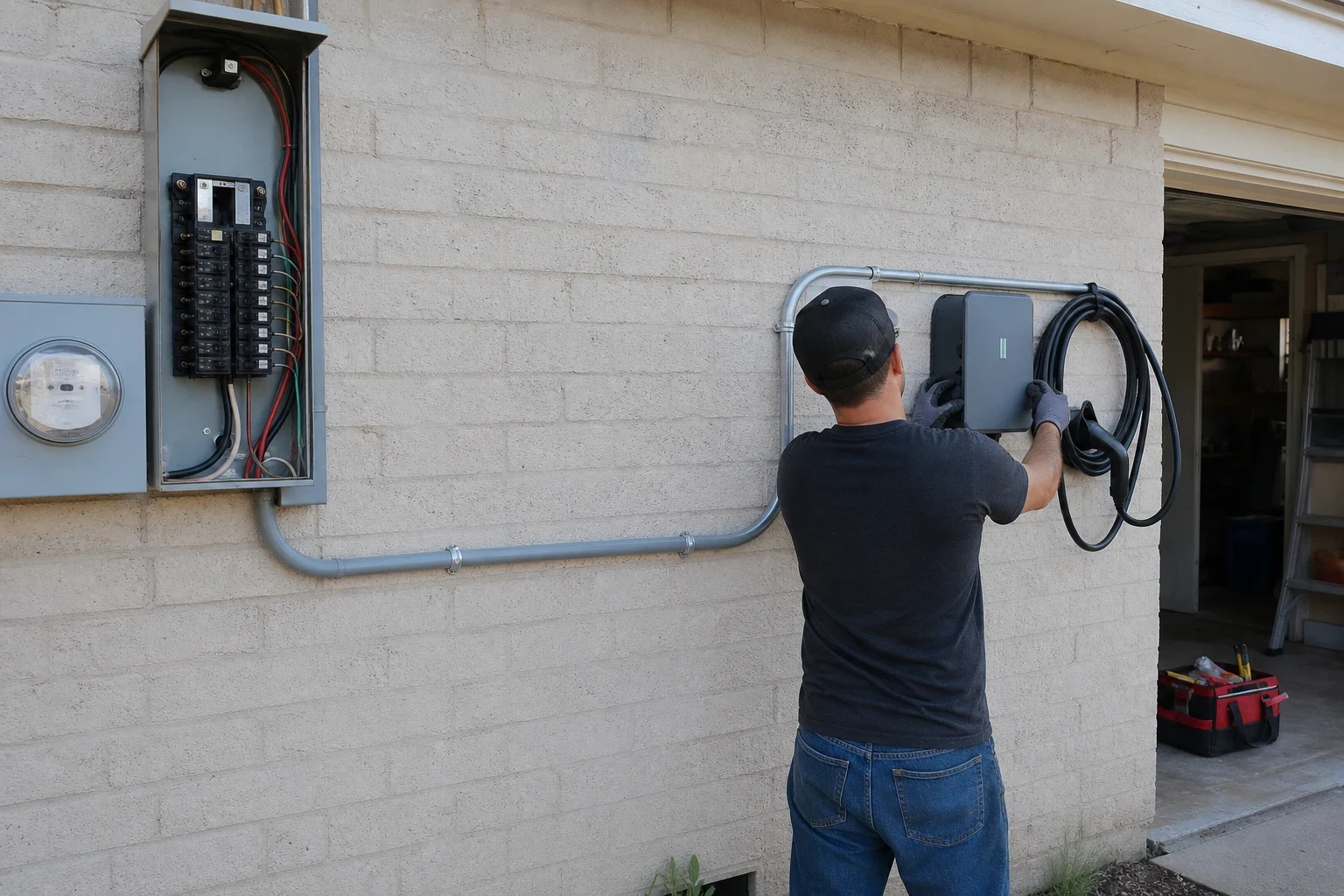
What a Home Charger Really Needs
Most EV owners start with the cord that came with the car, plugged into a standard 120-volt outlet. That is Level 1 charging, and it adds only a few miles of range per hour. A Level 2 charger runs on 240 volts, the same kind of circuit a dryer uses, and charges several times faster.
The charger itself is the easy part. The real work is the circuit behind it: the right breaker, wire sized for the load, a safe route from your panel to the parking spot, and enough spare capacity in your home's electrical service. Code treats car charging as a continuous load, so a charger set to pull 40 amps needs a 50-amp circuit. We walk you through those numbers so you know why we recommend what we do.
Our electrician holds a Master Electrical License, and we have spent 5 years in business wiring homes around White Settlement and nearby towns like Benbrook, Lake Worth and Fort Worth.
What Your Installation Includes
- Panel and load check
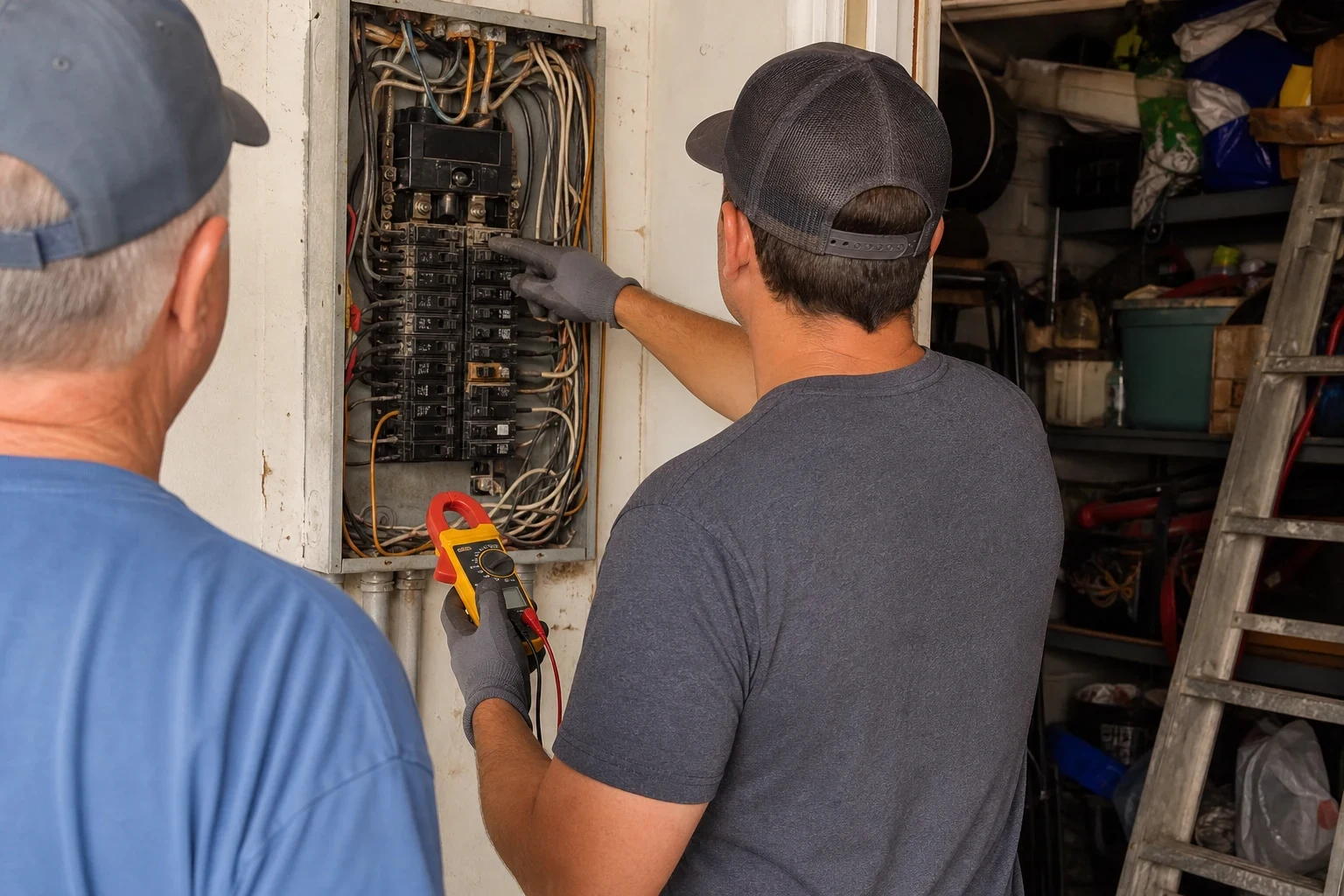
- Before quoting, we look at your panel's rating, open breaker spaces and the big loads already on it, like the AC, range and water heater. That tells us whether a charger fits as-is or needs a different plan.
- Plug-in or hardwired, explained
- A NEMA 14-50 outlet lets you unplug and take a portable charger with you. A hardwired wall unit is tidier and can often charge at a higher rate. We lay out the trade-offs and you choose.
- Dedicated 240-volt circuit
- A new breaker and correctly sized copper wire run just for the charger, so it never shares a circuit with anything else.
- Clean wire routing
- We run wire through the attic, along the garage wall in conduit, or outside to a driveway post, whichever is safest and neatest for your layout.
- Paperwork and sign-off
- Whatever permit your address calls for, we apply for it and line up the inspector's visit for you. Before we pack up, we run a test charge with you standing there so you see it working.
Signs It's Time for a Level 2 Charger
You wake up short on range
If a full night on a wall outlet still leaves you below what you need for the day, Level 1 is not keeping up.
An extension cord is involved
Running a car charger through an extension cord or a worn garage outlet can overheat connections. That one is worth fixing soon.
The garage outlet feels warm
Heat at the plug or a browned faceplate means the outlet is struggling with a long, steady load. Stop using it and have it checked.
A second EV is coming
Two cars sharing one slow outlet rarely works. We can plan a circuit, or a pair of chargers with load sharing, before the new car arrives.
What Moves the Price
No two garages are wired the same, so we price each install after seeing it. A short run beside a roomy panel is a simple job. A long run or a full panel adds work, and we tell you why before you commit.
Distance from the panel
Heavy-gauge wire is a big part of the material cost, so every extra foot between the panel and the charger matters.
Panel capacity
If your service has no room for a 40- or 50-amp circuit, you may need a load management device or a panel upgrade. We explain both honestly.
Route and finishes
Open attic access keeps things simple. Finished walls, a detached garage or an outdoor post with trenching take more labor.
Charger type
Hardwired units and plug-in outlets require different parts. You are welcome to buy your own charger; we will confirm it suits your circuit first.
How the Job Goes
- 1
Service visit and walkthrough
We look at your panel, your parking spot and the path between them. You tell us what car you drive and how far you go each day.
- 2
Your options in writing
You get a clear scope: circuit size, plug-in or hardwired, wire route and whether any panel work is needed. Nothing starts until you approve it.
- 3
Installation day
Most installs take part of a day. Power to the house is off only briefly while we land the new breaker, and we clean up drywall dust and wire scraps before leaving.
- 4
Test, inspect, charge
We confirm voltage at the charger, set its amperage to match the circuit, and show you how to use any app settings. The inspector signs off on the permit afterward.
EV Charger Questions We Hear Often
Can you install an EV charger in my garage?
Yes, garages are the most common spot. We can also mount a charger outside near the driveway using an outdoor-rated unit and weatherproof fittings. In Texas summers, a shaded wall helps the charger run cooler.
Will I need a panel upgrade?
Not always. Many homes have room for one charger circuit. If yours is close to its limit, we will show you the load math and explain choices like a smaller charger setting, load management or a panel upgrade.
Should I go plug-in or hardwired?
Plug-in suits you if you want to take a portable charger with you or might move. Hardwired is cleaner, can allow higher charging rates, and avoids a receptacle that wears with repeated plugging. Either one can be installed to code.
Who takes care of the permit for a charger?
We do. The application and the inspection visit are on us, following whatever rules apply where you live. That puts your new circuit on record, and a trained inspector gets a second look at our work.
How fast will my car charge?
It depends on the circuit size and how much your car can accept. A typical 40-amp setup adds around 25 to 30 miles of range per hour for many EVs, enough to refill a normal commute overnight.
Ready to Charge at Home?
Tell us about your car and your garage, and we will set a time to look at your panel and talk through the options. You will know what the job involves before any wire is run.